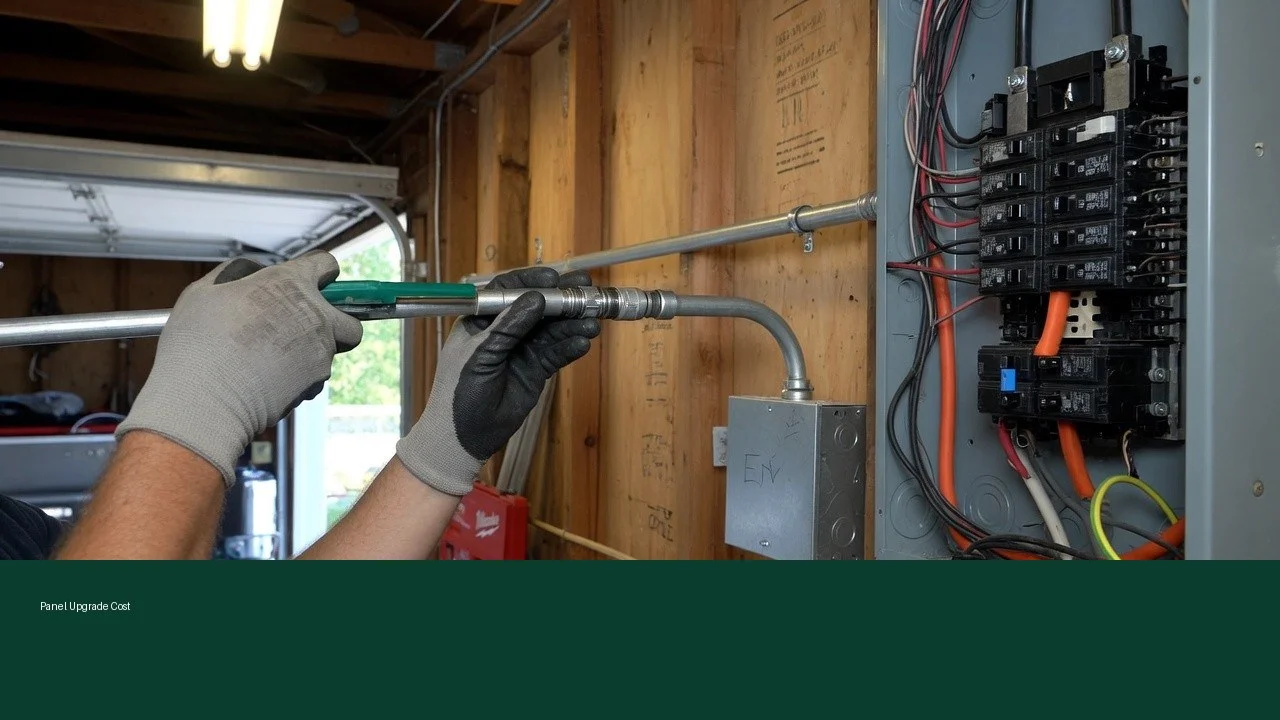
The scariest line in an EV install quote is often not the charger. It is “you need a panel upgrade.” Sometimes that is true. Sometimes it is a lazy default.
Short answer: If your service and load calculation cannot support a new continuous EV circuit safely, a panel or service upgrade in the USA commonly adds about $1,500 to $5,000+ to the project (sometimes more with utility fees). Many homes can add Level 2 without a full upgrade by choosing moderate amps, better routing, or load management. Demand a load calculation—not a glance.
What “panel upgrade” can mean (three different jobs)
| Phrase you hear | What it might mean | Cost vibe |
|---|---|---|
| New breaker space / reorganize | Tidy or replace interior parts | Lower than full service work |
| Panel replacement same amperage | New can, same service size | Mid |
| Service upgrade (e.g., toward 200A class) | Utility + main service equipment | Highest; fees vary |
Ask which of the three you are buying. They are not interchangeable.
When you actually need more capacity
- Load calculation shows the EV continuous load does not fit.
- Main breaker and existing large loads (HVAC, range, dryer, spa) already crowd the budget.
- Two EVs are planned without power sharing.
- Other electrification is coming soon (induction, heat pump) and you want one coordinated plan.
When you do not automatically need it: the panel “looks full” of breakers but service capacity still exists, or a lower amp EV design plus scheduling would work.
Planning cost bands (USA, 2026 thinking)
| Scope | Planning range | Notes |
|---|---|---|
| Load management device / shared EV logic | Hundreds to low thousands | Sometimes avoids full upgrade |
| Subpanel for garage | Often $800–$2,500+ class | Path-dependent |
| Panel replacement similar service | Often $1,500–$3,500+ class | Home age matters |
| Service upgrade with utility involvement | Often $2,500–$6,000+ class | Utility fees can surprise |
These are planning bands. Your city labor and utility rules win. Compare against the full charger project in Level 2 install cost.
Cheaper alternatives to try before you approve steel
- Lower continuous amp design that still finishes overnight — 40 vs 48 amp.
- Load management so EV throttles when the house peaks.
- Power sharing for two cars on one managed feed.
- Smarter location that shortens the run and simplifies the circuit.
- Workplace charging for one driver to cut home peak need.
A good electrician presents alternatives. A sales-only pitch jumps straight to the biggest package.
Questions that separate solid bids from fear bids
- Did you perform a load calculation? Can I see the summary?
- What EV continuous amp target are you designing for?
- What is the cost difference vs load management?
- Which fees are utility vs your labor?
- Will the charger circuit be permitted and inspected?
- How does this interact with future solar or battery plans?
How panel work changes total EV project math
Example A — no upgrade: $500 EVSE + $1,200 circuit ≈ $1,700.
Example B — management instead of upgrade: $500 EVSE + $1,100 circuit + $700 management gear ≈ $2,300.
Example C — service upgrade: $500 EVSE + $1,200 circuit + $3,500 upgrade class ≈ $5,200.
If Example C is truly required for safety, pay for safety. If Example B meets your nights, do not buy ego amps.
State flavor without fake precision
High-cost coastal metros often price labor higher. Hot climates stress outdoor equipment choices. Condo main services add politics. Use state notes when relevant:
Timeline and living through the work
Service upgrades can mean appointments with the utility, temporary power interruptions, and inspection gaps. Plan charger-dependent travel after final approval, not the morning after demo day.
Documentation to keep
- Load calculation summary
- Before/after panel photos
- Permit and inspection sign-off
- Final invoice with scope lines
- EVSE model and amp settings
Future buyers and future you will ask.
Red flags
- Upgrade recommended without calculation talk
- Cash-only, no permit where required
- “Maximum amps” pushed against your overnight reality
- No alternate price for load management
What a load calculation actually considers
A proper calculation looks at service size, existing large appliances, floor area methods where used, and the new continuous EV load. It is not a vibe from opening the door. If two electricians disagree, ask both to show the summary numbers. Disagreement is normal; secrecy is not.
Utility fees people forget
Service upgrades can trigger utility charges, meter work, or appointment delays. Ask who schedules the utility and who pays which line. A labor-only quote that ignores utility fees is incomplete for a true service upgrade.
Subpanel vs main service upgrade
Sometimes a garage subpanel fed correctly solves a messy main can without changing the service size. Sometimes it does not. Ask for both options when the main panel is crowded but the service might still be healthy. The cheaper sticker is not always the subpanel—distance and feeders matter.
Two-EV future without double panic
If EV #2 is likely, say so now. Designing one maxed circuit that blocks a second car is a classic regret. Power sharing or a staged second circuit can be priced as alternates. Bring the second-car timeline to the first site visit.
| Future plan | Ask the electrician |
|---|---|
| One EV forever | Moderate continuous design that finishes overnight |
| Second EV in 12–24 months | Sharing options vs second branch |
| EV + heat pump + induction soon | Whole-home electrification plan, not EV-only patch |
How to challenge an upgrade recommendation politely
“Can you show the load calculation summary and the cost delta for a 40A-class EV design with load management versus a full service upgrade?” Good pros answer with numbers. Pressure sales answer with fear only.
Insurance, resale, and paper trails
Permitted, inspected service work is easier to explain at sale. Keep photos and invoices. Unpermitted major electrical work can become a negotiation chip for buyers—and a headache if something fails.
Related MaxEvCharge guides
Old panels and safety beyond EV amps
Some upgrade conversations start because of EV, then reveal a tired panel with known problem product lines, rust, or double-tapped messes. In those cases the upgrade is not “EV greed”—it is home safety catching up. Separate the EV amp debate from “this panel should not stay.”
Generator interlocks and transfer equipment
If you already have generator interlock kits or transfer switches, tell the electrician before they design EV capacity. Backup gear changes how loads are counted and how outages behave. Surprises here create redesigns mid-project.
Phased electrification roadmap
Homes adding EV, then heat pump, then induction in three separate years often pay three times for panel thinking. If you can forecast major electric appliances, price a coherent service plan once. EV can be phase one without painting you into a corner—if you say the future out loud.
| Phase | Possible work | Note |
|---|---|---|
| Now | EV circuit + any urgent panel safety | Get reliable home charging |
| 1–3 years | Second EV share or heat pump prep | Use make-ready if walls open |
| Later | Full service only if loads demand | Avoid early overbuy when possible |
Quote red flags specific to panel proposals
- Upgrade recommended without showing any load numbers
- One line price with no utility fee discussion
- Pressure to decide same day without a scope sheet
- No alternate price for lower amp EV plus management
- No permit line in a city that clearly requires one
Walk away from fear-only sales. Good electrical work can be urgent without being vague.
After the upgrade: first EV circuit still needs craft
A new panel does not automatically include a perfect EV branch. Confirm the EV circuit is still designed for continuous load, labeled, and tested. Upgrade day and charger day can be the same crew or staged—just do not assume one price covered both unless the invoice says so.
Talk track for partners who only see the dollar total
Explain three buckets: safety fixes you may need anyway, capacity for the car you already drive, and optional headroom for future appliances. People accept costs better when buckets are separate instead of one scary lump.
Sample decision worksheet
| Question | Your note |
|---|---|
| Load calc shown? | |
| Upgrade type (panel vs service)? | |
| Utility fees included? | |
| Alt price for management path? | |
| EV continuous amp target? | |
| Second EV in 24 months? |
FAQ
Does every Level 2 charger need a 200-amp panel?
No. Many homes add a circuit on existing service after proper calculation.
Is a full panel looking crowded the same as overloaded?
No. Breaker count and service capacity are related but not identical. Calculate.
Can load management be safe?
When designed and installed correctly as part of a listed system approach, it is a normal tool. It is not a DIY jumper-wire idea.
Will a panel upgrade increase home value?
Sometimes it helps modern electrical readiness. Do not assume full dollar recovery. Safety and function come first.
What should I read next?
Install steps and the main cost guide.
Educational USA guide. Not an engineering stamp or contractor bid. Licensed electricians and utilities set real requirements and prices.