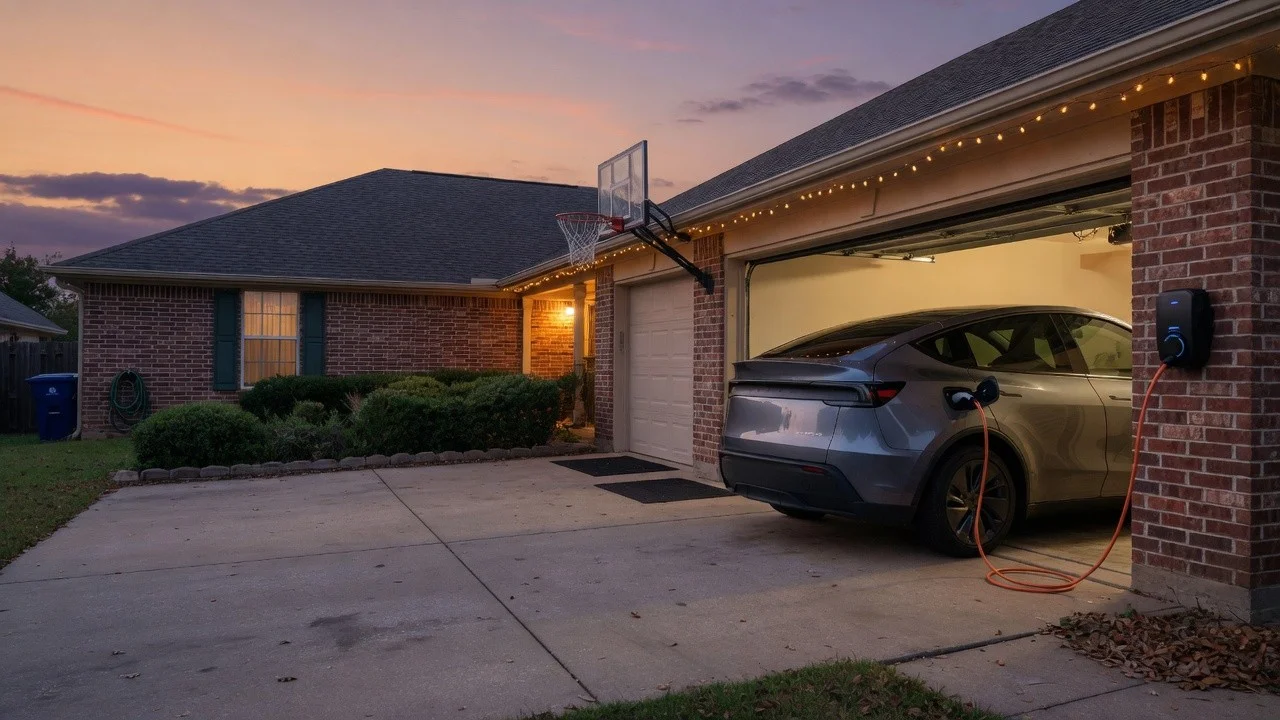
Three names dominate “vs” searches: Tesla Wall Connector, ChargePoint Home class units, and Emporia home chargers. Feature grids are easy to copy. Garage fit is not.

Short answer: Pick the unit that matches your household car mix, connector needs, install type, and whether you care about energy tracking or power sharing. Tesla-first homes often like the Wall Connector path. Mixed fleets and data-focused homes often compare ChargePoint and Emporia class options. The best choice is the one that installs cleanly on your panel and does not fight daily plug habits.
How we compare (not a paid ranking)
We do not claim secret lab winners. Model numbers, prices, connector kits, and app features change. Use this page as a scenario guide, then verify the exact current SKU and your electrician’s scope.
Side-by-side planning table
| Planning lens | Tesla Wall Connector lane | ChargePoint Home lane | Emporia lane |
|---|---|---|---|
| Best-fit household | Mostly Tesla, clean hardwired wall | Drivers who want a mainstream smart ecosystem | Value + energy visibility, solar-aware homes |
| Connector story | NACS-native story for Tesla-centric garages | Often flexible J1772/NACS product paths—confirm SKU | Confirm current plug options for your car year |
| App / account | Tesla ecosystem comfort | ChargePoint app familiarity | Emporia energy monitoring angle |
| Typical buy motive | Simple Tesla-matched home charging | Smart scheduling + brand recognition | Data, load awareness, strong value narrative |
| Watch-outs | Mixed-fleet guests, future non-Tesla cars | Feature/pricing changes; read current terms | Match install type and connector carefully |
Scenario A — Tesla-only garage
If every daily driver is a Tesla and you want a tidy hardwired install, the Wall Connector lane is the obvious shortlist leader. Still confirm cable length for your parking angle and whether a second unit or power management is coming later.
Scenario B — Mixed fleet (Tesla + non-Tesla)
This is where pure brand loyalty fails. You need a connector strategy for both cars, or a disciplined adapter plan that does not annoy you every night. Many households pick a flexible Level 2 unit and keep a quality adapter for the odd guest car. See NACS vs CCS.
Scenario C — Solar, battery, or tight panel
If you care about matching charge rate to solar production or avoiding panel upgrades, energy-aware units and load management matter more than badge prestige. Emporia-class conversations often start here, but any unit still needs a correct circuit design. Amp choice: 40 vs 48 amp.
Scenario D — Renter or possible move in 2 years
Hardwired elegance is less attractive if you will take the charger with you. Plug-in designs and portable Level 2 can be smarter—if the receptacle is installed to code. Do not prioritize brand fame over move logistics.
What the feature grids under-explain
Cable length and port side
A “great” unit with a short cable is a daily annoyance if your charge port faces the wrong way. Measure before you buy.
Account lock-in and offline behavior
Ask: does charging still work if Wi‑Fi dies? Do you need an account for basic charging? Can you set a local amp limit?
Service and warranty reality
Wall units live for years. Check warranty length and how replacements work, not only launch-day marketing.
Install cost dominates unit cost
A $100 hardware gap rarely matters if one design forces a harder install. Budget with install cost tiers.
Power sharing and second car
If EV #2 is coming, ask each brand’s current power-sharing story and what your electrician recommends for your panel. Two maxed circuits can be more expensive than one smart shared feed.
A fair shortlist process
- Write scenario letter (A–D) for your home.
- Lock connector and amp targets.
- Pick one candidate from two lanes max.
- Send both to electricians with panel photos.
- Choose the pair (hardware + bid) that is boringly safe.
Broader shopping context: best home EV chargers 2026.
Install notes that change the winner
Some units are happier hardwired. Some households need plug-in. Some want outdoor ratings. A brand that “wins” a YouTube ranking can lose in your garage if the cable is short or the mount fights the stud layout. Send the product sheet to the electrician before purchase.
Data privacy and account minimalism
If you dislike apps, prioritize units that charge fully without cloud login. If you love energy graphs, Emporia-class monitoring may justify an account. If you already live in Tesla’s app, Wall Connector friction is lower. Match personality, not only specs.
Guest charging etiquette
Mixed households need a guest story: adapter on a hook, a second portable, or a connector that accepts visitors without a 20-minute lecture. Write that story before holiday weeks expose the gap.
Resale and home listing value
A clean, permitted Level 2 circuit can be a listing plus. Brand fashion matters less than “dedicated EV circuit inspected.” Keep documents. Buyers ask.
Decision card (print this)
| If your home is… | Shortlist first |
|---|---|
| Tesla only, hardwired garage | Wall Connector lane |
| Mixed plugs, want mainstream smart app | ChargePoint Home lane |
| Want energy tracking / solar-aware charging | Emporia lane |
| May move in 24 months | Plug-in / portable-friendly lane |
| Tight panel | Any brand with adjustable amps + electrician load plan |
Price shopping without obsessing over $50
Street prices move with kits and connector options. Compare equal amp classes and equal cable lengths. Then add install quotes. A $50 hardware “win” disappears if one unit needs a harder mount or different circuit accessories.
Firmware and long-term support
Smart chargers are part appliance, part gadget. Prefer brands that still support last-year models with fixes. If a company is opaque about updates, weigh that against shiny launch features.
When to pick “none of the above”
If your constraints are extreme outdoor exposure, a portable-only rental, or a special load-management ecosystem, a fourth brand can win. The three-name search is a starting shortlist, not a law.
Mixed fleet cable kit on a budget
If you cannot buy two wall units, keep one quality home EVSE plus a labeled adapter kit and a portable backup for travel. Write the guest instructions on a card near the unit. Confusion at 10 p.m. is how cables get forced into the wrong ports.
App outage behavior test
After install, toggle Wi-Fi off once and confirm the car still charges. If it does not, decide whether you accept cloud dependence. That single test prevents surprise mornings later.
How to read amp marketing without overbuying
Box amps are a ceiling. Your car’s onboard AC charger and your panel design set the real speed. A premium brand at 48A on a car that only takes ~32A AC wastes money if that choice forced a hard panel upgrade. Match the system, not the brochure.
Five garage measurements before you order
- Charge port side when the car is parked “normally.”
- Wall stud location and free height for a clean mount.
- Distance from panel to mount (feet, not vibes).
- Indoor vs true outdoor exposure.
- Whether a second EV will park beside the first within two years.
These five facts eliminate more bad purchases than any brand ranking chart.
Feature fairness matrix (what to verify on the current SKU)
| Question | Why it changes the winner |
|---|---|
| Hardwired only or plug-in option? | Move plans and code path |
| Cable length in the box you will actually buy? | Daily reach beats brochure amps |
| Connector on that exact SKU? | NACS/J1772 mix-ups are common in kits |
| Local amp limit without cloud? | Panel stress and outage behavior |
| Power sharing story for two cars? | Second EV cost later |
| Warranty years + support path? | Wall units live a long time |
When “best brand” still loses
A top-ranked unit loses if the cable cannot reach the port without blocking a walkway, if the outdoor rating is wrong for a carport, or if the install bid doubles because the mount forces a long exterior run. Rank lists do not see your stud bay. Your electrician’s scope does.
A 20-minute shortlist workshop
Write your scenario letter (Tesla-only, mixed, solar/data, renter/move). Circle two brands max. Send both product links plus panel photos to two electricians. Pick the pair that is safe, permitted, and boring. “Boring” is a compliment in home electrical work.
For broader shopping order, keep using the panel-first buying guide. For amps, see 40 vs 48 amp.
FAQ
Which is best overall?
There is no universal best. Tesla-centric homes, mixed fleets, and solar-tracking homes optimize differently.
Can non-Teslas use a Tesla Wall Connector?
Adapter and connector strategies exist in some setups, but daily friction matters. Confirm the exact hardware path for your car before you buy.
Is ChargePoint only for public stations?
No. ChargePoint also sells home products. Public network membership is a separate topic from the wall unit in your garage.
Is Emporia only for solar homes?
No. Solar-friendly monitoring is a common reason people shortlist it, but any home that wants energy visibility may care.
Should I wait for a new model year?
If your charging is already painful, a solid installed Level 2 beats waiting for marketing cycles. Specs move; safe 240V design stays.
Independent comparison framework for USA homes. Verify current model specs, pricing, and install instructions before purchase. Not a paid endorsement.