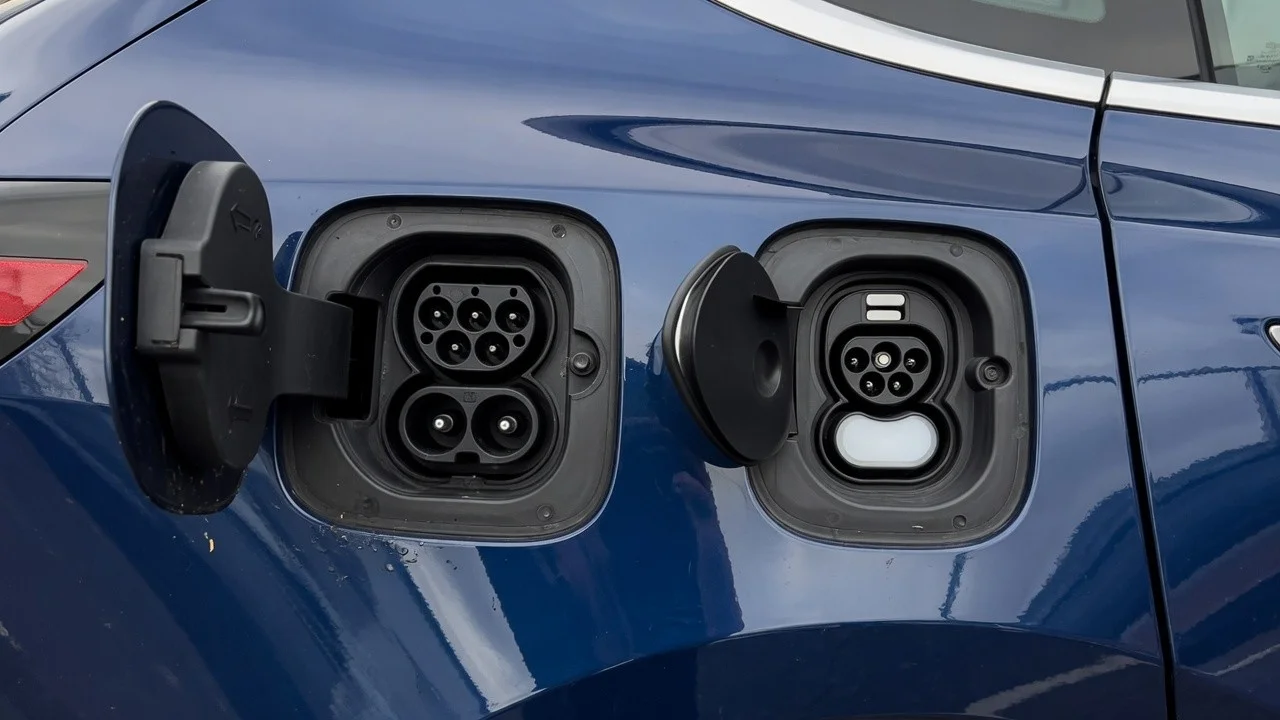
Plug standards articles love origin stories. Drivers need a simpler thing: what fits the car tonight, and what goes in the glovebox for a road trip.

Short answer: In the USA, NACS (also known as SAE J3400, the Tesla-style plug family now adopted more widely) and CCS1 (Combined Charging System with the familiar DC pins under a J1772-style AC inlet) are the two public fast-charging languages you will meet most. At home, most people still charge on AC Level 1 or Level 2. Your home cable should match your car’s port when you can. Adapters bridge the rest—if you buy the correct direction and type (AC vs DC).
What most explainers bury under history
They spend paragraphs on which company invented which shape. You need three practical maps: home AC, public DC fast charging, and adapter direction. Mix those up and you buy the wrong brick.
Home AC vs public DC (do not mix these up)
| Context | What you usually plug in | Speed class |
|---|---|---|
| Home Level 1 | 120V portable cord | Slow overnight top-ups |
| Home Level 2 | 240V wall unit or receptacle EVSE | Typical home “full by morning” |
| Public DC fast | CCS1 or NACS high-power handle (site dependent) | Road-trip recovery |
A DC adapter for Superchargers does not replace a correct home Level 2 plan. Home is still where most energy should land for daily driving. See Level 1 vs Level 2.
Port families in plain words
J1772 is the common AC connector shape used on many non-Tesla EVs for Level 1/2. CCS1 adds DC pins below that AC inlet for fast charging.
NACS is the slimmer connector family used by Tesla and increasingly by other brands on new vehicles. It can handle AC and DC depending on the equipment and car design.
Your owner’s manual wins over any blog diagram if they disagree.
Glovebox decision tree (2026 reality)
- What port is on my car? NACS or CCS1/J1772 family?
- Where do I charge most days? Home AC should match the car without daily adapter drama when possible.
- Which DC networks will I use? Tesla Supercharger access rules and third-party CCS stations differ by car and app.
- Which adapter direction do I need?
- CCS1 car → NACS station handle: need the adapter made for that direction (often discussed as access to Tesla stations).
- NACS car → CCS1 station: need the opposite direction adapter.
- Do I also need an AC adapter? DC adapters and AC adapters are not always the same product. Hotels and destination chargers may be J1772 AC only.
Adapter rules that prevent expensive mistakes
- Prefer automaker-approved or widely trusted adapters; warranty language matters.
- Learn the lock sequence for your car (some cars must unlock before unplugging adapters).
- Do not leave cheap adapters as permanent outdoor fixtures.
- Carry the adapter you need for the networks you actually use—not five random SKUs.
- Check power limits: an adapter may not unlock the station’s maximum kW for every car.
Buying a home charger in a NACS transition year
If your next car will change ports, ask:
- Does the wall unit offer the connector I need now?
- Is there a cable or connector path for the next car?
- Will I accept a daily adapter at home? (Most people regret daily adapter friction.)
Shopping process: best home EV chargers 2026. Brand fit scenarios: Tesla vs ChargePoint vs Emporia.
Road trip planning without panic
- Map stations in the apps your car actually authorizes.
- Note plug type icons, not only the brand logo on the highway sign.
- Plan a buffer in winter and in rural stretches.
- Know your AC fallback (hotels, workplaces) if a DC station is offline.
Myths
“NACS means I only charge at Tesla.” Not automatically. Port shape and network access are related but not identical issues. Software access and payment rules still matter.
“CCS is dying tomorrow.” Plenty of CCS hardware remains in the field. Transition years mean adapters and mixed networks, not a single overnight flip.
“Home needs DC.” Almost never for daily use. Level 2 AC is the home workhorse.
Station apps, payment, and “the plug fits but it will not start”
Mechanical fit is only step one. Many networks need an account, autoload payment, or automaker roaming partnership. Before a long trip, open the apps your car supports, check a sample station along the route, and confirm whether adapters are allowed at that site.
Home Level 2 during the standard transition
If you buy a new car in 2026, confirm the port before you reorder wall-side hardware. If you keep an older CCS1/J1772 car and add a NACS car, plan for mixed household charging. Sometimes two cables or a carefully chosen adaptable EVSE beats permanent adapter gymnastics.
Workplace and destination charging
Hotels and offices still deploy many J1772 AC stations. NACS-only thinking fails there. Keep an AC strategy even if your road-trip life is DC-adapter heavy.
How to label the adapters in your trunk
- Write direction on tape: “CCS car → NACS station” or the reverse
- Store the manufacturer pouch so pins stay clean
- Practice once at home or a nearby station before a 600-mile week
Buying a used EV: port diligence
Used listings may show cars mid-transition. Ask which port is on the car, which adapters are included, and whether Supercharger or other network access is active for that VIN. A cheap car with expensive daily friction is not cheap.
Fleet and workplace mixed standards
Employers may install J1772 AC banks for years even as DC networks shift toward NACS handles. Employees should not assume office plugs match their road-trip adapter kit. Check the workplace plug photo, not the press release about national standards.
How manufacturers phrase “NACS ready”
Marketing phrases vary: native port, adapter included, adapter sold separately, or software access pending. Translate every phrase into: what is in the car today, what is in the box, and what requires an account.
Home charger cable choice checklist
- Car port today
- Likely car port in 24 months
- Guest cars monthly?
- Willingness to use a daily adapter at home (usually low)
Teaching family members the adapter routine
One person in the household often understands the plugs. Teach a second person the unlock order and which adapter is which. Road trips fail in parking lots when only one person knows the dance.
Public station etiquette that saves time
Park straight, start the session in the app before you walk away, and move when you finish if the site is busy. Adapter users should practice the lock/unlock order once at home. Most “adapter failed” posts are sequence mistakes or account/payment issues, not magic hardware defects.
Home vs road: two shopping lists
| Need | Home list | Road-trip list |
|---|---|---|
| Daily energy | Correct Level 2 cable for your port | Optional |
| DC networks | Not required at home | Right-direction adapter + apps |
| Hotel AC | N/A | J1772 strategy if your car needs it |
| Backup | Portable cord | Second payment method in apps |
Buying a used EV in the adapter era
Used listings often bury the port story. Ask three questions before you send a deposit: what port is on the car today, which adapters come with the sale, and whether network access (apps, accounts) still works for that VIN. A cheap car with a missing official adapter can cost you a weekend of shipping delays right before a trip.
Also ask whether the seller used third-party adapters daily. Bent pins and worn locks are real. Inspect the inlet for debris and damage the same way you would inspect tires.
Network access is not the same as plug shape
Your car can have a NACS port and still need account setup for certain stations. Your car can have CCS1 and still reach some Tesla stalls with the right adapter and partnership. Before a long route, open the apps your automaker supports and confirm a sample station along the path. Mechanical fit without payment authorization is a parking-lot dead end.
Home charging decisions for mixed years (2024–2027 cars)
| Household mix | Home cable plan | Glovebox plan |
|---|---|---|
| One NACS car only | NACS Level 2 when possible | CCS adapter only if you use CCS DC often |
| One CCS1/J1772 car only | J1772 Level 2 daily | NACS-direction DC adapter if Supercharger access matters |
| One of each | Flexible EVSE or two cables / disciplined adapters | Both directions only if you truly travel both networks |
| Company car + personal car | Match the daily driver first | Label adapters by car name, not by color alone |
Common adapter failure modes (and boring fixes)
- Wrong direction bought: return before the trip; labels beat memory.
- Session will not start: app login, payment method, and station outage checks before blaming hardware.
- Stuck adapter: follow the car unlock sequence; do not yank at an angle.
- Slow charge: many adapters and stations cap power; read the on-screen kW, not the highway billboard.
- Wet outdoor mess: dry hands, inspect seals, avoid puddle parking when you can.
None of this replaces a solid overnight Level 2 plan at home. Road adapters are backup and travel tools.
FAQ
Is NACS the same as Tesla proprietary forever?
NACS started as Tesla’s connector and has been standardized as SAE J3400 for broader industry use. Implementation details still vary by automaker and year.
Can one adapter do AC and DC?
Do not assume. Read the product rating. Many popular road-trip adapters are DC-focused. Destination J1772 AC may need a different solution.
What plug should my wall connector have?
Match your car’s AC inlet when you can. If household cars differ, plan adapters or a connector strategy carefully.
Does plug type change install cost?
Usually less than panel distance and amperage. Still, confirm the exact unit before the electrician finishes the circuit. See install costs.
What about apartments?
Shared stations may be J1772, NACS, or mixed. Ask the property which plugs exist before you buy adapters you will not use. Guide: apartment EV charging.
USA driver education. Network access rules change. Confirm with your automaker app, station apps, and owner’s manual before a long trip.