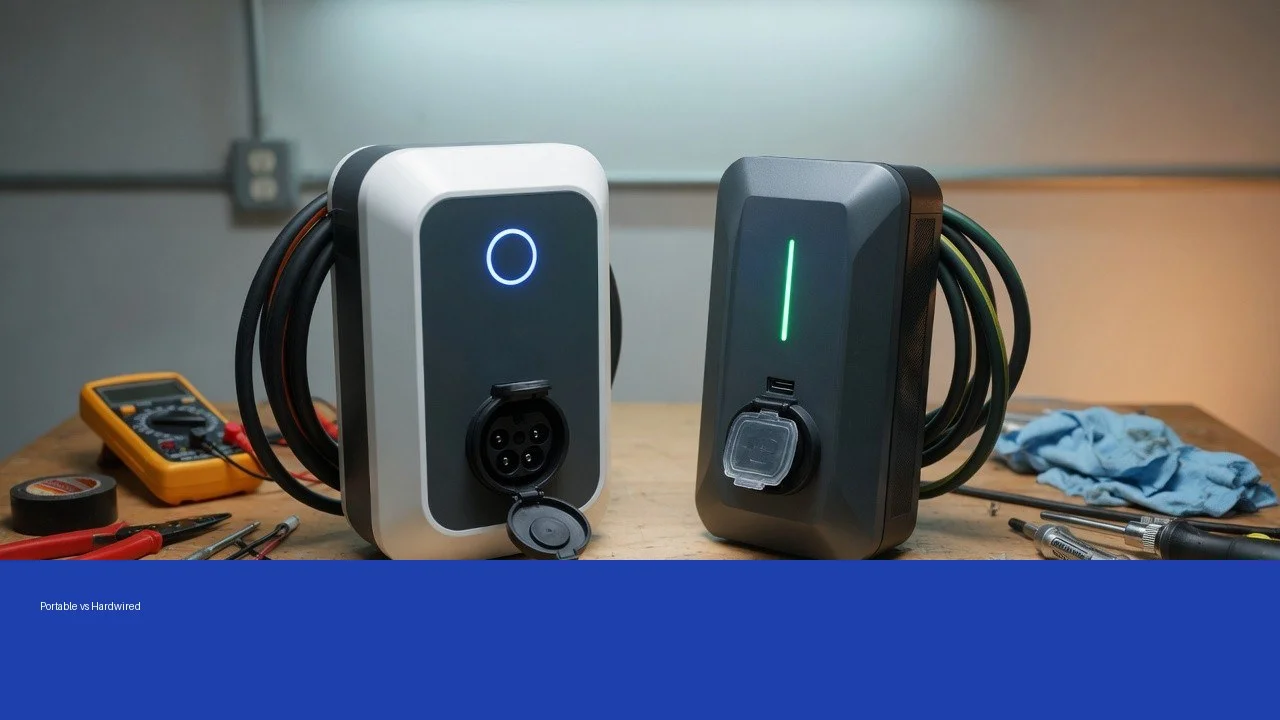
Portable Level 2 sounds like freedom. Hardwired sounds like “the real install.” Both can be right. Both can be wrong for your parking space.
Short answer: Hardwired wall units are excellent for permanent homes with a clean garage wall and a settled car mix. Portable Level 2 (plug-in EVSE on a correct 240V receptacle) wins when you may move, need travel flexibility, or your approval path favors a receptacle. Neither is safe on a random shared outlet or a flimsy extension cord plan.
Definitions without marketing fog
| Type | What it is | Typical home power |
|---|---|---|
| Portable Level 2 | EVSE you can unplug and take | Often 240V via NEMA-style receptacle |
| Hardwired Level 2 | Wall unit connected to a circuit without a plug | Dedicated branch circuit |
| Level 1 portable | 120V cord set | Slow overnight top-ups |
Portable does not mean “no electrician.” A correct 240V receptacle is still an electrical project. See NEMA 14-50 outlet cost and Level 1 vs Level 2.
Decision tree (use this before shopping brands)
- Do you control the panel and walls (own vs rent)?
- Will you likely move within 24 months?
- Is the parking spot indoor, outdoor, or uncertain long-term?
- Do you need one clean daily cable or travel flexibility?
- What connector does your car need (NACS / J1772)?
| If this is true… | Lean… |
|---|---|
| Own home, stable parking, hate plugs | Hardwired |
| May move; want to take hardware | Portable L2 + quality receptacle |
| Renter with written approval for receptacle only | Portable L2 |
| Renter with zero approval | Level 1 + workplace/public stack — not secret 240V hacks |
| Two cars, permanent home | Hardwired with sharing plan, or two designed circuits |
Cost comparison (system cost, not Amazon price only)
| Path | Hardware vibe | Electrical work vibe | Move-out story |
|---|---|---|---|
| Portable L2 + 14-50 class receptacle | $300–$800 class unit common | Receptacle circuit project | Take the unit; leave or remove receptacle per agreement |
| Hardwired wall unit | $300–$800+ class common | Hardwire circuit project | Unit may stay with house or be removed carefully |
Total installed cost often lands in similar bands when the run length is similar. The difference is lifestyle and code path more than a magic $50. National ranges: install cost guide.
Safety and wear differences people skip
- Plug cycles: Portable means a receptacle gets used. Buy quality devices; inspect for heat and wobble.
- Trip hazards: Cables across walkways are how people get hurt and how managers get angry.
- Weather: Outdoor portable use needs equipment rated for the environment.
- Theft: Portable units can walk away in open carports—plan storage.
- GFCI nuisance: Some combinations trip more; follow manufacturer guidance and local rules.
Renter path (legal and practical)
Written approval first. Offer licensed work, removal terms, and cable management. Do not piggyback a neighbor’s outlet. Apartment politics guide: apartment EV charging.
Homeowner path (permanent calm)
If you are staying put, hardwired is often the cleanest daily experience: one motion to plug the car, less receptacle wear, tidy wall. Still confirm connector and amp design before ordering. Brand fit scenarios: Tesla vs ChargePoint vs Emporia.
Travel use cases
Portable Level 2 shines at second homes, family visits with a known 14-50, and work sites that offer a proper receptacle. It does not replace public DC on long interstate days. Keep adapters for the networks you actually use — NACS vs CCS.
Hybrid strategy many households like
Hardwired at home for nightly calm. Keep a portable as travel backup if you already own one. Or: quality receptacle now, hardwired later when the second EV arrives and you rework the wall. Staging beats regret purchases.
Buying mistakes
- Portable L2 bought before any receptacle plan exists
- Hardwired unit ordered with wrong connector for the car
- Assuming “portable” means any 240V plug you find
- Ignoring outdoor ratings
- Skipping amp limits your panel can support
Daily ritual comparison
| Moment | Portable on receptacle | Hardwired wall unit |
|---|---|---|
| Arrive home | Uncoil / plug EVSE if stored, then car | Usually one plug to car |
| Morning leave | Unplug car; maybe store EVSE | Unplug car; cable returns to holster |
| Guests | Adapter and cable management matter | Same, but mount is fixed |
| Moving homes | Take EVSE easily | Removal may need electrician |
Apartment and condo specifics
Portable gear does not legalize unauthorized electrical work. If the building only offers shared stations, your “portable” unit may sit in a bag unused. If you get an assigned receptacle project approved, portable can be ideal. Policy first, Amazon second. Read apartment charging.
Heat, cold, and cable stiffness
Cold mornings make cables stiff. Outdoor portable setups need discipline so cords are not slammed in doors. Hardwired holsters help daily neatness. Neither system removes winter efficiency loss in the car—see charge time math for planning.
Theft and vandalism
Open carports and street-facing posts invite theft of portable units. Locking storage and visibility matter. Hardwired units can still lose cables to vandals, but the box is less “grab and go.” Factor neighborhood reality into the choice—not only amp charts.
Resale of the house
A clean hardwired circuit with permit docs can be a listing plus. A quality receptacle can also be a plus for the next EV owner. A sketchy shared-dryer tap is a minus. Buy the story you want to tell later.
Worked scenarios
Scenario A — first home, 10-year stay: Hardwired mid-amp Level 2, documented install.
Scenario B — military / job moves every 2–3 years: Portable L2 + excellent receptacle work you may leave behind.
Scenario C — HOA hates exterior boxes: Interior hardwired or interior receptacle; fight aesthetics early.
Scenario D — one Tesla + one non-Tesla later: Connector strategy first, then portable vs hardwired.
Shopping list after you choose a path
- Confirm connector and amp target.
- Get electrical quotes for that exact path.
- Buy hardware that matches the accepted bid.
- Permit and inspect as required.
- First charge checklist from the install guide.
Related: best chargers guide, 14-50 cost, panel upgrade cost.
Workplace charging changes the home choice
If you gain reliable workplace Level 2, home can stay simpler—sometimes even Level 1 for a while. If workplace is unreliable, home hardwired calm matters more. Be honest about workplace uptime before you spend on maximum home gear.
HOA aesthetics and both paths
Hardwired exterior boxes can trigger architectural review. Portable cords draped across balconies can trigger complaints faster. Interior garage solutions reduce drama. Bring photos to the board either way.
Kids, pets, and cable discipline
Households with kids and pets need holsters, hangers, and clear floors. Hardwired holsters often win for neatness. Portable can work with strict put-away habits. Choose the system your household will actually maintain at 10 p.m.
Final chooser card
| Priority | Pick |
|---|---|
| Stay 5+ years, clean daily routine | Hardwired |
| Move soon / take gear with you | Portable L2 |
| Renter with written receptacle approval | Portable L2 |
| No electrical approval possible | Level 1 + other charging stack |
| Two cars long-term | Hardwired + sharing plan (usually) |
Connector kits and portable SKUs
Some portable units ship with interchangeable plugs or adapter kits. That flexibility is useful—and a foot-gun if you plug into an undersized receptacle. Match the plug kit to the circuit you actually installed. Do not force a 14-50 head onto a mystery outlet because it almost fits.
Firmware and app dependence
Portable and hardwired smart units can both depend on apps. Test offline charging once. If the unit refuses to charge without cloud login, decide whether you accept that before you standardize on it for nightly use.
Insurance and landlord photos
For rentals, photograph the approved install and keep the email thread. If something fails years later, proof of licensed work matters. For owned homes, permitted hardwired work is cleaner in a claim file than a mystery cord farm.
When to revisit the decision in 12 months
Revisit if you add a second car, move parking outdoors, change jobs (workplace charging), or start taking long road trips weekly. Portable vs hardwired is allowed to evolve. What should not evolve is safety standards.
Cost honesty side-by-side
| Cost piece | Portable path | Hardwired path |
|---|---|---|
| EVSE unit | Often similar band | Often similar band |
| Electrical labor | Receptacle circuit | Hardwire circuit |
| Move-out | Take unit | Possible removal labor |
| Wear item | Receptacle cycles | Cable/holster wear |
FAQ
Is portable Level 2 real Level 2?
Yes, when it is a proper 240V EVSE on a correct circuit. Portable describes the form factor.
Which is faster?
Amps and the car decide speed more than portable vs hardwired labels.
Can I hardwire a unit that also has a plug version?
Some product lines offer both. Follow the exact model instructions—do not invent a conversion.
What if I rent and might buy a house next year?
Portable L2 with a properly approved receptacle can travel with you. Get permission in writing.
What install guide should I follow?
How to install a home EV charger — then choose path with your electrician.
USA planning guide. Not electrical advice. Use licensed pros for new 240V work and follow manufacturer instructions.